
How to choose a good Punch Clock
BLOG Last updated April 22, 2026
Selecting an effective time clock system is a critical decision for any business, impacting everything from payroll accuracy to operational efficiency. Moving beyond simple tradition requires careful consideration of features, reliability, and true value.
Biometrics are a waste of time
One of the most heavily marketed features in modern time clocks is the use of biometrics, such as facial scanning or fingerprint readers, often touted as the ultimate solution to "buddy punching." However, in a real-world business setting, especially for larger organizations, biometrics often prove to be a significant waste of time. The practical hurdles for HR or accounting teams to set up, manage, and maintain these systems across a large workforce are immense. Furthermore, these features tend to suffer from reliability issues that frustrate users and administrators alike. Crucially, they fail to address the most common time clock problem: the unlogged early departure. In our experience, a staggering ninety percent of time clock discrepancies are caused by an employee choosing not to clock out when leaving early, often due to a reluctance to admit their premature departure. Biometrics offer absolutely no solution for this human behavioral issue. For the most foolproof monitoring, the most effective strategy for businesses remains the use of security cameras directed at the time clock and entrance points, providing irrefutable evidence of attendance issues.

Queues at the punch clock
Another common association with traditional punch clocks is the inevitable queue that forms when the end-of-day bell rings and every employee rushes to clock out simultaneously. A truly effective time clock system must prioritize speed. It should allow people to clock in and out with such rapidity that a queue simply doesn't have the time to form, ensuring a smooth and quick transition at the start and end of shifts.

Advantages and disadvantages of cloud
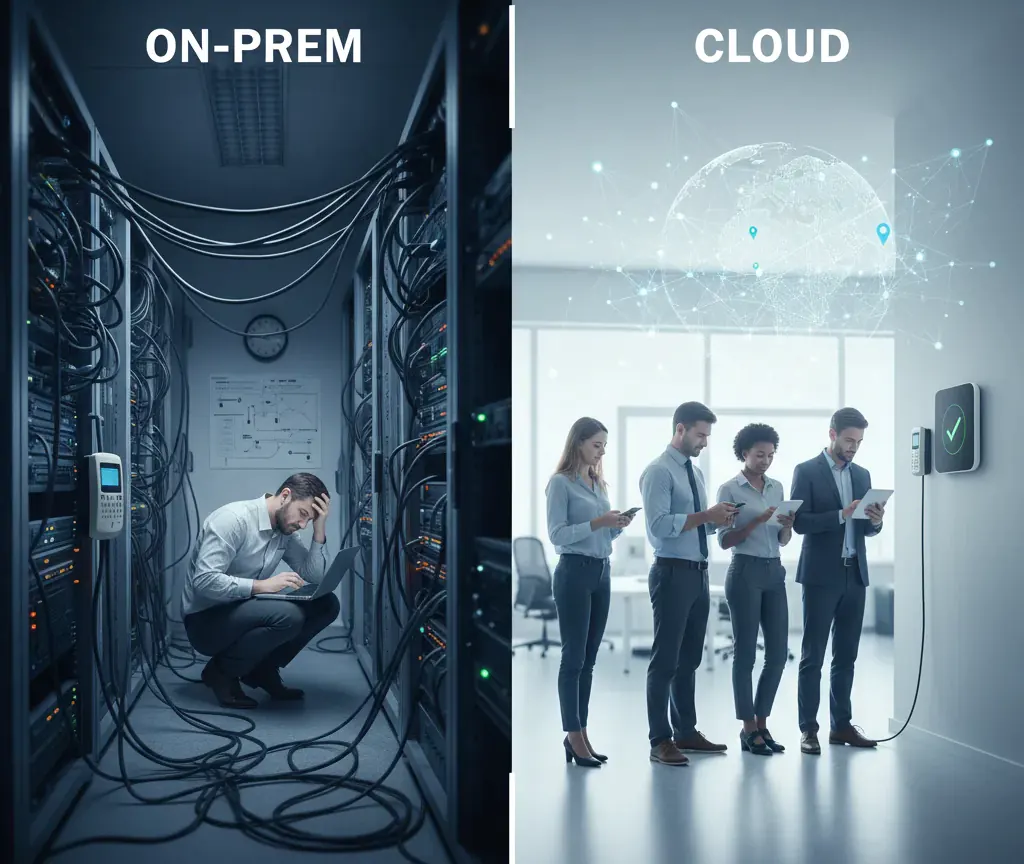
Businesses must also decide between on-premise (on-prem) and cloud-hosted solutions. While an on-prem solution keeps data within the company's own infrastructure, it can severely limit the feature set available. Many advanced functions are simply too difficult or complex to reliably host and maintain locally. A prime example is an application that uses technologies like sockets to provide instant, real-time data transfers between the server and the clock-in devices. Setting up this kind of complex, high-reliability architecture is a significant challenge, often requiring multiple perfectly tuned components that are beyond the capability of most internal Sysadmins. Cloud hosting eliminates this infrastructural burden and generally provides access to richer, more robust features.
GPS location tracking
For businesses with mobile or remote workforces, the presence of GPS location tracking integrated into a mobile application is essential. This feature allows users to clock in remotely while providing the business with verifiable data on their location at the time of clocking. This is a must-have for modern field service or distributed teams.
Price
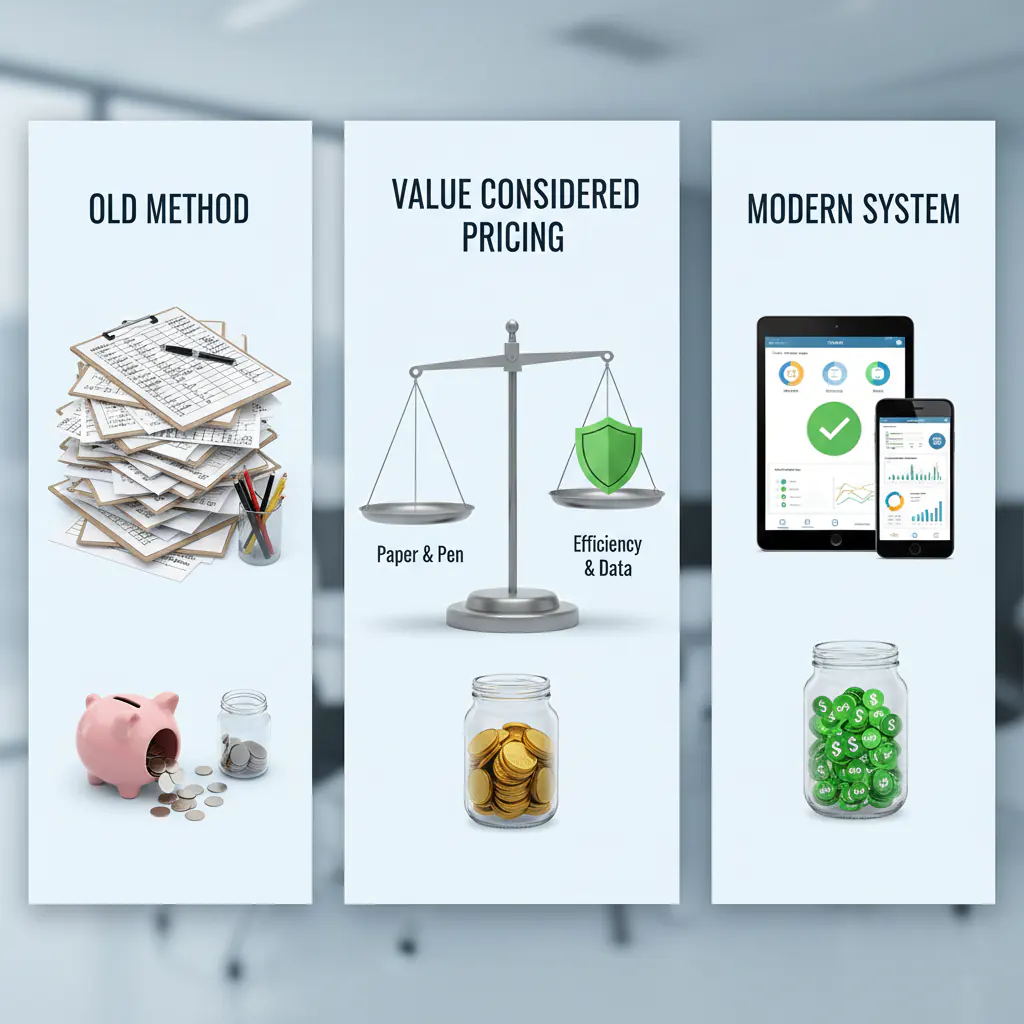
Finally, the discussion comes down to price. At the end of the day, a service should only cost what its value truly is. A time clock's fundamental function is to replace a simple paper sign-in sheet, which employees manually use to record their arrival and departure times. The pricing of any sophisticated time clock solution should be reflective of the efficiency, data accuracy, and feature set it provides, and should remain grounded in the value it delivers over that basic, low-cost paper method.

Loïc Joachim
Loïc Joachim is a New Zealand-based IT professional, entrepreneur, and political figure, currently serving as the Managing Director for Timeclock.Kiwi and the IT Manager for the O'Brien Group. He is also involved in politics as the Deputy Chair of the Dunedin Labour Party and is a prolific writer who shares his knowledge and opinions on technology, business, and political affairs.